
What Professional Pool Cleaning Actually Involves and Why It Matters
Most pool owners think of cleaning as skimming leaves off the surface and occasionally running the vacuum along the bottom. What professional pool cleaning actually involves goes considerably deeper than that, addressing the invisible biological and chemical processes that determine whether a pool is genuinely safe and healthy to swim in rather than simply clear enough to look inviting from the deck.
The Difference Between a Clean Pool and a Healthy One
A pool can look perfectly clear and still harbor conditions that are harmful to swimmers or quietly damaging to the surfaces and equipment beneath the waterline. Homeowners investing in professional Frisco pool cleaning services discover that the difference between a pool that looks clean and one that genuinely is clean comes down to the thoroughness and expertise applied during every single visit.
Surface Cleaning Addresses More Than Aesthetics
First and foremost, brushing pool walls, steps, and floor surfaces during each cleaning visit does far more than remove visible dirt and debris. Regular brushing disrupts the early formation of algae colonies and biofilm that attach to surfaces before they become visible to the naked eye. By the time algae is clearly visible, it has already established itself well enough to require significantly more chemical treatment and physical effort to eliminate.
Filter Cleaning Is Where Real Water Quality Is Won or Lost
Furthermore, the filtration system is the mechanical foundation of water quality in any pool, and its performance degrades steadily as it accumulates the debris and contaminants it is designed to capture. A filter operating at reduced efficiency allows particulates and biological material to recirculate through the water rather than being removed from it. Professional cleaning includes regular assessment and cleaning of filtration media, ensuring the system operates at the capacity the pump and plumbing were designed to support rather than struggling against a progressively restricted flow.
Waterline Tile and Scum Lines Require Consistent Attention
Another component of thorough pool cleaning that is easy to overlook until it becomes a significant problem is the waterline tile or surface where water meets the pool wall. Body oils, sunscreen residue, and mineral deposits accumulate at the waterline with every swim session, forming a visible and increasingly stubborn scum line that becomes harder to remove the longer it is left unaddressed. Regular professional attention to the waterline keeps this buildup manageable and prevents the kind of deeply set staining that requires aggressive chemical treatment or professional restoration to correct.
Debris Removal Protects More Than Water Clarity
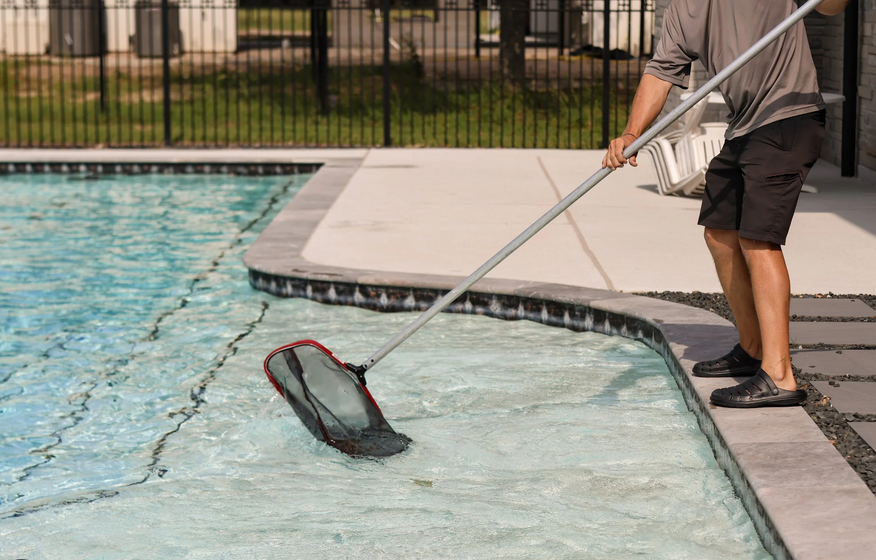
Finally, the prompt removal of organic debris including leaves, insects, and plant material from both the surface and the floor of the pool is more consequential than it appears. Decomposing organic matter consumes sanitizer, drives up phosphate levels that feed algae growth, and can stain pool surfaces if left in contact long enough. Consistent debris removal as part of every professional cleaning visit reduces the chemical demand on the water and protects pool surfaces from the staining and deterioration that organic buildup causes over time.
Conclusion: The Difference Between a Clean Pool and a Healthy One
To bring it all together, professional pool cleaning addresses surface biofilm, filtration performance, waterline buildup, and organic debris in ways that go well beyond what casual maintenance achieves. A genuinely clean pool is one that has been consistently and thoroughly cared for at every level, and that standard of care is exactly what protects the health of swimmers and the long-term condition of the pool itself.
Recent Comments